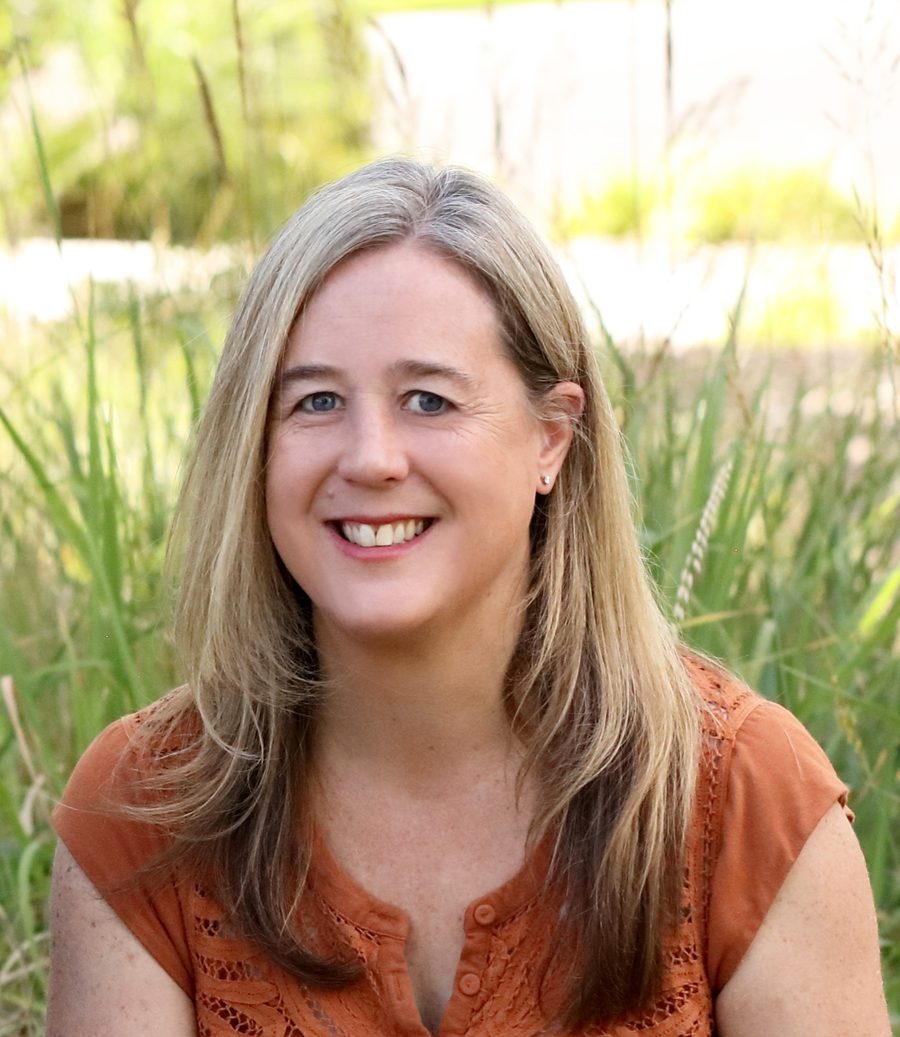
Mavyn Holman
Fractional Chief Innovation & Growth Strategist
I provide the experience of an Innovation Executive when you need it — without the search, salary, or commitment.
Fractional describes the structure of the relationship, not the level of involvement. I engage deeply with the organization to understand the problem and co-create the solution, while building and leading the teams that will ultimately own the capability.
The advisor leaves right before the hardest part begins.
Interviews & data requests
Implementation is left to your team.Most of the work, and most of the risk, lands after the advisor is gone.
That structure flexes to the work — we size it together around what your situation actually calls for. Two levers set the shape: how long I’m engaged, and how much of a full-time role that is.
Typical examples, not fixed packages — both engagement level and duration can be adjusted to meet the need.
Often, companies reach a point where they have talented people and exciting initial product offerings, but the strategies, systems, and cross-functional connections needed to scale innovation have not kept pace with growth.
Do any of these challenges sound familiar?
If this feels like your experience, it doesn’t mean something has gone wrong. It means your company has grown beyond the ways of working that got it here—and that’s worth celebrating.
The opportunity now is to recognize what’s changed, build the capabilities the next stage requires, and create an organization where innovation becomes repeatable and drives sustained growth.
That’s the kind of challenge I love to help companies tackle.
Sometimes the first fix is the whole story — identify the constraint, build the capability, done. More often it isn't, because clearing one bottleneck increases what flows into the next stage, and that stage becomes the new constraint. At a small but established global leader in high-performance adhesives, it walked the entire value stream:
Ideas in
× Cannot effectively support all potential projects
✓ Cross-functional portfolio review process and team
× Poor translation of lab-scale results to production
✓ Process engineering team; Design Control process
× Costly and time-consuming re-work
✓ Continuous improvement processes
× Problems not identified before reaching customers
✓ Proactive complaint trend identification process
× Disconnected systems; no visibility between sales and orders
✓ CRM–ERP integration; campaign tracking and visualization
100+ products launched, a decade of double-digit growth
Four engagements — what was in the way, the capabilities I built, and what that enabled.
~150-person software company
In-house
The constraintNew investment brought order targets the company wasn’t equipped to hit — disconnected systems that couldn’t help sales win the business, or keep those customers once it did.
SystemsSalesforce (SFDC) data-quality and governance solution; Enterprise Document Management; a customer advocacy platform that kept customers heard and made them available as references to shorten sales cycles.
ProcessesA solution-evaluation framework that made every new system a cross-functional decision rather than one team’s, slowing the spread of redundant tools; ROI estimation and tracking across all process-improvement initiatives.
100-person productization business unit within a biotech startup
In-house
The constraintThe company could engineer molecules no one else could make, but needed to productize them to maximize their value — with organic chemists who had never formulated, and no plan for which applications to target and in which order.
ProcessesA five-year, capability-driven product-development roadmap for bio-ingredient-enabled adhesives, with a strategic market-entry approach.
TeamsBuilt formulation capability from the ground up, mentoring a group of small-molecule chemists into an application-focused product team.
50-person founder-led specialty chemical company, with new leadership brought in to grow it
Fractional
The constraintThirty years of success had been built on ways of working that growth would now stress — every project taken on, no formal route through scale-up, and no way to know what each new market required.
SystemsPortfolio management and visualization tools; globally compliant regulatory and SDS authoring software.
ProcessesThe company’s first Stage-Gate product-development and commercialization framework — formalizing decision criteria, documentation and accountability, aligned across R&D, Operations and leadership.
500+ person global innovation team within a 10,000+ person food company
Fractional
The constraintA global innovation team formulating across disjointed, manual tools, with no good way to share what anyone learned — and already on its fourth innovation system, each one with low adoption.
SystemsOne end-to-end platform for the full global innovation team: structured data capture, knowledge sharing, and the analytics foundation for AI-assisted formulation.
ProcessesCurrent-state workflow mapping and gap analysis turned into a future-state map and requirements; a structured method for assessing solutions on capability, scalability, user experience, supplier strength and value.
TeamsRan requirements gathering and hands-on evaluation with the people who would use the system, alongside a human-centered design partner — so adoption was designed in rather than hoped for.
I love solving complex problems — both the technical ones and the organizational ones around them. I am an Engineer both by training and by passion, having built my technical foundation (BS and MS in Materials Science and Engineering / Polymer Chemistry) at MIT. After that, I joined the Electronic Materials group at AlliedSignal (now Honeywell), where Six Sigma, Total Quality Management, and Stage Gate weren’t just initiatives — they were a way of life. This process-oriented mindset became integral to how I think and work.
As employee 51 at E Ink — now a multi-billion-dollar global display company — I learned to bring the right elements of process discipline to fast-moving, cutting-edge research. My work modeling component-level impacts on the display’s electro-optic performance contributed to some of the company’s foundational patents. But what I’m most proud of was using that work to identify the root cause of a stubborn reliability problem — then designing and scaling a creative, manufacturing-ready solution that helped launch an early generation of products.
That crystallized the idea that has shaped my mindset ever since: success, for me, is getting the right products into customers’ hands reliably, efficiently, and profitably. For this, the innovation engine has to extend beyond the lab door. A technical breakthrough doesn’t create lasting value if it doesn’t enable features customers actually want, can’t be manufactured consistently at scale, or can’t reach customers reliably to trigger repeat orders.
Over the next sixteen years as Director of R&D at Epoxy Technology — a small but mighty global leader in high-performance adhesives — I truly began to see the pattern and formalize my toolkit. While leading and growing the R&D team to launch more than 100 products addressing demanding customer needs in high-tech markets, I found I was equally energized by chasing down the bottlenecks that could otherwise have kept those solutions from reaching customers. Each new obstacle called for building a new foothold: a digital backbone that made the work visible end to end; a design-control process that could carry products from concept through launch; a process engineering team to own scale-up and manufacturability. Systems, processes, teams — I’ve been recombining those three ever since.
Along the way, I’ve helped companies across microelectronics, medical devices, fiber optics, specialty chemicals, food innovation, and digital transformation. I’ve also been on the founder’s side of the equation, launching a specialty bread company using upcycled spent grain from local brewers. The industries have changed, but the underlying challenge hasn’t: finding what’s standing between a good idea and the customer, then building what’s needed to close that gap.
Today, I help teams turn innovation from a collection of projects into an organizational capability. I find the gaps, build what’s missing, bridge silos, and create the footholds that connect customer insight, technical strategy, product development, commercialization, manufacturing readiness, and continuous learning — so each launch becomes the foundation for the next and drives sustained growth.
I’m based in Boulder, CO, in the foothills of the Rocky Mountains, where you’ll usually find me hiking with my family, sampling the local craft-beer scene, faithfully supporting Tottenham Hotspur in the Premier League, or knee-deep in whatever hands-on project has my attention that week.
If this resonates with you, I’d love to hear your company’s story.